

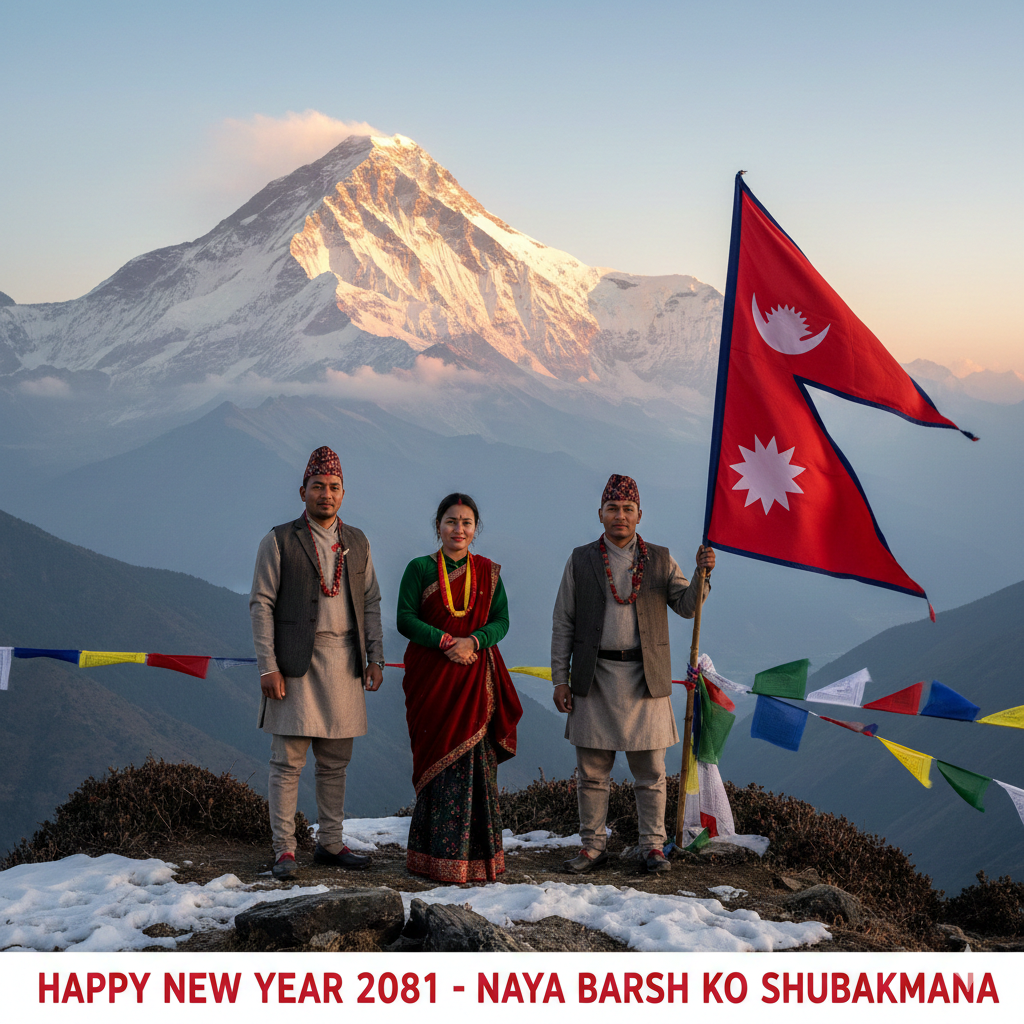
Nepal follows a calendar called Bikram Sambat, and this system places the country in the year 2082, while most of the world uses the Gregorian calendar and calls the same period 2025. At first, this can feel confusing, but the reasons behind it are actually practical, historical, and deeply cultural.
Below is a simple and complete explanation of how this calendar works, why it is different, and why it matters in everyday life in Nepal.
What Is the Bikram Sambat Calendar?
Bikram Sambat is a lunisolar calendar, which means it is based on both the sun and the moon. The year is aligned with the solar cycle, but the months are shaped by the lunar cycle. Because of this mixed structure, the months do not always have the same number of days.
The calendar begins about 56 years and 8 months earlier than the Gregorian calendar. That difference is why Nepal is in 2082 while the rest of the world is in 2025.
A simple way to think about it:
- If the world says it is 2026, Nepal says it is 2082.
- The difference changes slightly depending on the month because Nepal’s new year does not start in January.
Nepal’s New Year Begins in Spring
One of the most unique aspects of the Nepali calendar is when the year begins. Instead of starting in January, the Nepali New Year begins on Baisakh 1, which falls in mid-April. This timing is not random. It matches the start of spring, a season of renewal across the country.
Spring in Nepal brings many changes that make the idea of a new year feel natural and symbolic:
- Trees grow fresh leavesafter the winter.
- Birds begin building their nests, preparing for new life.
- Farmers start planting crops, including paddy in many regions.
- Weather becomes warmer and more comfortable, marking a fresh start.
Because of this seasonal shift, the Nepali year begins at a time when nature itself is renewing. For many people, this makes much more sense than starting the year in the cold of January.
How the Calendar Is Structured ?
The calendar has 12 months, each named differently from the Gregorian system:
- Baisakh
- Jestha
- Asar
- Shrawan
- Bhadra
- Asoj
- Kartik
- Mangsir
- Poush
- Magh
- Falgun
- Chaitra
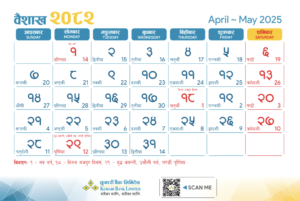
Photo from www.kumaribank.com, 2026
Each month can have a different number of days depending on lunar movement. From time to time, an extra month is added to keep the calendar aligned with the solar seasons. This extra month is called Adhik Maas, and it only appears when necessary.
Weeks in Nepal Are Different Too…
The Nepali week also has a structure that stands apart from many other countries. While many cultures consider Mondaythe first day of the week, Nepal considers Sunday the start.
- Sunday is the first day of the week.
- Saturday is the last day of the week.
- Saturday is the public holiday, not Sunday.
This means Nepali workers and students enjoy their weekly break on Saturday, and the week begins fresh on Sunday, matching the cultural rhythm of the country.
A Simple Comparison of Years
| Gregorian Calendar | Nepali Calendar |
| January 2025 | 2081 B.S |
| April 2025 | Start of 2082 B.S. |
| December 2025 | Still 2082 B.S. |
Because the Nepali new year begins in April, the year changes at a different time compared with the Gregorian system.
Why Nepal Continues to Use Bikram Sambat ?
People sometimes wonder why Nepal doesn’t switch to the Gregorian calendar like most countries. The answer is tied to culture, tradition, and identity.
The Bikram Sambat calendar is used for:
- Government records
- School schedules
- Festivals and religious events
- Agriculture and seasonal planning
- Daily life and social celebrations
For example, major festivals like Dashain and Tihar are calculated using the Nepali calendar. Weddings, house-warming ceremonies, and other life events follow the lunar dates in this system.
Because of its deep connection to traditions and natural cycles, the Bikram Sambat calendar remains an important part of Nepal’s identity.
Why This Matters ?
The calendar is not just a way of tracking dates. It reflects how the people of Nepal see the world. It connects time to nature, seasons, farming, and cultural practices. It also shows that different societies measure time in a way that fits their environment and values.
While the rest of the world may be in 2026, Nepal proudly continues its journey in 2082 not because it is ahead in time, but because it follows a system rooted in its own history and way of life.

Interesting
Good research and explanation.
Very beautiful and informative explanation that clearly highlighted the insighful history and significance of the Vikram Sambat calendar.